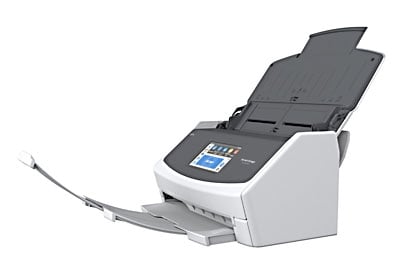
The favourite affordable Fujitsu Scansnap scanner of almost every business is being retired. The darling and often revered by Accounting offices, Lawyers, Custom brokers and other busy offices etc. The ScanSnap ix500 is being phased out.
Read More

Canada Wide: 1-877-LEPPERT
Burlington: 905-333-8766
Hamilton: 905-522-9029
email: support@leppert.com
Trusted by Canadians for over 49 years!
The favourite affordable Fujitsu Scansnap scanner of almost every business is being retired. The darling and often revered by Accounting offices, Lawyers, Custom brokers and other busy offices etc. The ScanSnap ix500 is being phased out.
Read MoreTopics: workflow processes, Scanning, document filing, digital tools
We all know that traditional retail industries have changed significantly due to the digitization of commerce. While there are still more dollars changing hands in physical stores than online the volume of digital transactions have mushroomed exponentially and the interaction at physical stores has changed as well.
Read MoreTopics: workflow processes, Scanning, document management, business processes, paper filing, Paperless office, digital tools, digital filing, automation
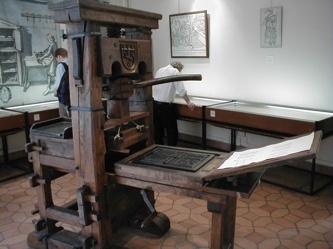
Until the development of 3D Printing when someone talked about printing we all understood it was a two dimensional output, black or coloured toner on a flat piece of paper.
With the development of 3D printing and its rapid advancement into using many different types of raw product for the printing of three dimensional objects the technology has been pretty revolutionary for all kinds of fields. One of these is the automobile field, especially for the production of one off parts.
In a recent video I saw produced in Jay Leno's garage a famous place to anyone who has an interest in automobiles he describes how they have used 3D printing to produce parts for cars at the extremes of his collection. In one case it is product for a 100 year old early generation electric car and in another parts for a special one off concept car that they created.
Read More
Topics: technology tools, Printer, digital tools

Anyone who spends any time watching news reports about technology issues is aware that there was a significant outage of Amazon Web Services (AWS) last week. There were many major organizations who experienced outages as a result of the failure and it was a little time before news got out to tell us what happened.
Amazon has been forthright in saying that it was an error in their system combined with some long time format issues which caused the problem.
"Removing a significant portion of the capacity caused each of these systems to require a full restart. While these subsystems were being restarted, S3 was unable to service requests. Other AWS services in the US-EAST-1 Region that rely on S3 for storage, including the S3 console, Amazon Elastic Compute Cloud (EC2) new instance launches, Amazon Elastic Block Store (EBS) volumes (when data was needed from a S3 snapshot), and AWS Lambda were also impacted while the S3 APIs were unavailable."
What started out as a fairly routine maintenance activity escalated into a systems delay which had a major impact on a large number of organizations.
Just a couple of the hundreds (maybe thousands) of articles which have been written to deal with the outage.
In spite of the overall reliability that such large IT systems offer there are a few things that any IT operator might learn from the situation that Amazon experienced and that led to some uncomfortable hours for many of their customers.
Having answers to these types of questions is an important part of any business plan. In our highly digitized world it may be necessary to maintain some analog systems which could keep you functioning if the digital infrastructure has to be shut down.
I know of one local company that actually maintains a paper based 'emergency' system for all of their order desks so that customers would not be totally inconvenienced if the electronic systems they normally rely on got shut off. They have a formalized recovery procedure on how to capture the data from the paper system into the electronic one when it is again back on line, without creating duplication, or inconveniencing their customers. Can your organization says they are this prepared for a failure?
Luckily, IT systems are very robust normally, and system administrators take the need for security, backup, redundancy and planning seriously. This means that for most organizations they can operate each day without a threat of disaster hanging over their heads.
However, as the recent AWS, S3 issue has shown even the top professionals in the space can be caught out and even with a pretty quick recovery there can be a large amount of inconvenience, confusion and disruption.
Topics: cloud computing, IT network, digital tools

One of the biggest issues for IT security and business operations is keeping their data safe and secure.
There is a massive amount of material available about data backup, building redundancy for continued operations and how to teach people to be careful in providing access to company data. In spite of all of the effort and expense that is put into this field there are still too many data breaches.
Read MoreTopics: data security, digital tools

Over the past fifteen years a revolution has occured in the printing industry. I can remember when the typical office copier was an analog device with super advanced features like the ability to expand an image to a larger size.
Read MoreTopics: Multifunction Printer, business processes, digital tools

Every business has been affected by the disruption of business practices which the digital revolution of the past twenty years has created. Virtually every aspect of operations have been affected by the changes in technology and latterly in communication which has been fostered by the low cost of computing power, the creation of portable instant communications and the world wide spread of easy access to information,
Read MoreTopics: document filing, business processes, digital tools

This blog discusses ways to optimize and improve the management and production of documents used in your business.
Business documents and their content - whether paper or electronic, are the repository of corporate knowledge which underpins all of the functions of commerce. Using them well can have a significant impact on your success.
